
You Can't Hand Off What You Don't Have: What ISTE Taught Me About AI Literacy
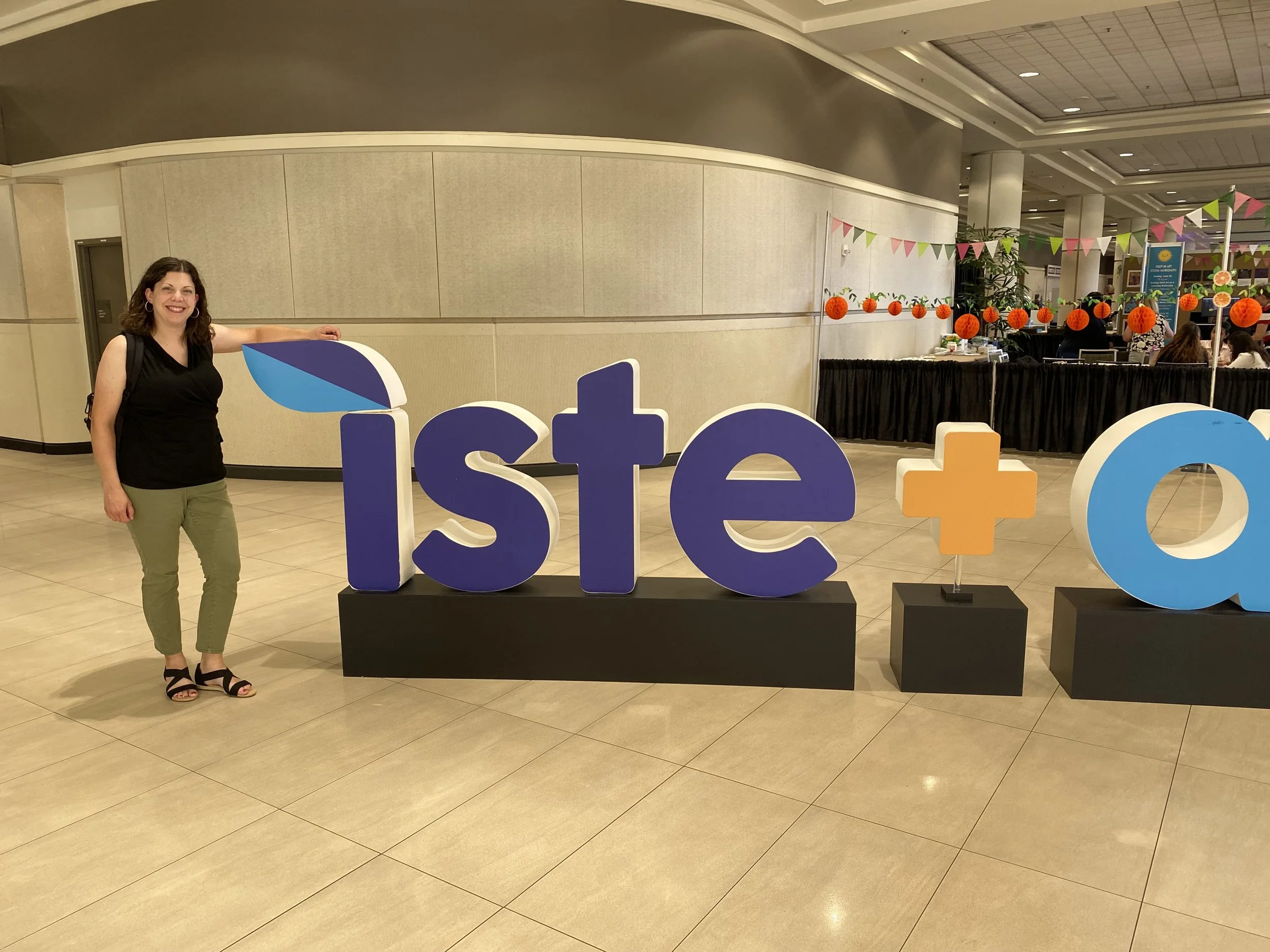
I just got back from an amazing experience at ISTE Live, and my main takeaway is this: teachers need to become AI literate before we can expect our students to be. You can't hand off what you don't have. Session after session, the conversation kept circling back to the same starting point — not which AI tool to try next, but whether teachers themselves feel confident enough to lead that conversation in their own classrooms.
Critical Thinking as a Habit, Not an Activity
One of the main concerns that is often raised regarding AI in education is the diminishing of critical thinking skills. At ISTE, Dr. Michele Haiken tackled this topic head-on. In her session, she made an important distinction: critical thinking isn't something students do once during a lesson — it's a habit that has to be practiced, over and over, until it becomes instinct. That distinction matters more than ever with AI in the room.
Haiken was clear about what AI can and can't do. It can automate tasks, analyze data, and boost productivity. What it can't do is think critically, understand emotion, generate a truly original idea, or adapt on the fly the way a human can. The danger isn't AI itself — it's what happens when we let it replace the thinking instead of support it. Passive learning, fear of the technology, and dehumanized instruction are all real risks if we're not intentional.
The antidote Haiken offered was what she called a "survival toolkit": brain-based learning strategies like storytelling, movement, student choice, and collaboration, paired with strong SEL foundations — belonging before rigor, relationships that build retention, and space for metacognition. AI can genuinely enhance accessibility and differentiation when it's used well. But the sequence matters: student thinking has to come first, and AI supports it from there. Humans still lead.
Start with People and Problems, Not Tools
Two sessions on my last day at ISTE landed on the same core idea from different directions. The GenerationAI Luminaries panel put it simply: identify the problem first, then decide whether AI actually helps solve it. Not the other way around. One thing AI does well is helping students "offload unproductive struggle." Not all struggle is worth protecting. Part of teaching well is knowing which friction builds understanding and which just gets in the way.
The design thinking session that followed built on that same instinct. Before reaching for a tool, ask what a person's actual challenges and motivations are — start with outcomes and pedagogy, not the technology. That session offered a simple framework for it, SPARK: name the Situation, identify the real Problem, articulate the Aspiration behind it, define the Result you're after, and only then bring in AI for a Kismet moment — a few ideas to react to, not a solution to defer to.
The common thread: AI works best as a response to a clearly defined human need, not as a starting point. Teachers who lead with the problem end up using AI more intentionally than teachers who start by asking "what can this tool do?"
Prompt the Human Before the AI
The most useful framing from ISTE came from Eric Curts, who spoke about something really important: cognitive debt. When AI comes first and human thinking comes second, we accumulate this debt. When human thinking comes first and AI supports it afterward, we get the best results — for learning and for the actual quality of the work.
Curts was careful to note that AI itself isn't the problem. The problem lies in how AI is used. Students shouldn't go to AI empty-handed. They need to engage with the material, form their own thinking, and only then bring AI in — for feedback, for expanding an idea, for a challenge to their reasoning. The human has to stay involved at every step, including the last one: evaluating what AI actually contributed and deciding what to do with it.
This has practical implications for how we as educators design assignments, too. Building in more in-class work, multi-stage assignments with check-ins along the way, and a focus on process rather than just the final product all make space for that human-first thinking to happen — and make it a lot easier to see where it did or didn't.
The AI-Ready Graduate
Richard Culatta framed the tech-in-schools debate in a way I appreciated: this isn't a question of more versus less. Banning technology outright hurts kids, but using it without purpose does too. The real question is quality — the depth and intention behind how students interact with digital tools, not just how much time they spend on them.
That same nuance applies directly to AI. Culatta was direct about where the goal line actually is: we need to move from learning about AI to learning how to use AI in service of human skills. That's a meaningful shift. It's not enough for students to understand that AI exists or even how it works — they need practice using it in ways that strengthen judgment, creativity, and critical thinking rather than replace them.
He described this as the "Profile of an AI-Ready Graduate" — and creating the conditions for it takes more than good intentions. It takes clear policies, prepared educators, digital citizenship instruction, and parents who understand the why behind the tools being used. None of that happens by accident, and none of it happens without teachers who are AI-literate themselves.
Where Do We Go From Here?
Urgency without direction isn't useful — so here's where I'd start, whether you're in the classroom or leading a building.
For teachers:
Practice using AI yourself before introducing it to students. You can't model something you haven't tried.
Build in one small AI-supported activity where students do the thinking first and use AI second — for feedback, for pushback, for expanding an idea. Notice what changes.
Get explicit with students about what responsible AI use looks like in your classroom. Don't assume they already know what you mean.
Start small. One lesson, one unit, one class — not a full overhaul.
For school and district leaders:
Prioritize AI-specific professional learning, and protect real time for it — in PLCs, in staff meetings, not just as a "one and done" session.
Craft clear AI guidelines and share them directly, rather than assuming staff and students are on the same page about what's expected.
Create space for teachers to share what's working. Peer knowledge travels faster than top-down mandates.
Loop parents in early. Communicating the why behind AI use builds trust before problems show up.
The tools will keep changing. The sequence doesn't: human thinking first, AI in support of it, and teachers ready to lead the way. That's the work.